
First Groundhog Day
Way Back Wednesday for February 1-7


It’s a new Wednesday, which means that it’s time to take a new look at something old. This week’s feature is sure to make any winter-hating astronomer (we are legion!) feel a little warm inside, at least for a moment. Why? This week’s feature spotlights a holiday that gets one thinking spring: Groundhog Day, which was first celebrated in 1887.
Monday was Groundhog Day, which meant only one thing to most people: did Pennsylvania’s famed “weather predicting” groundhog, Punxsutawney Phil, see his shadow? Obviously, a groundhog’s shadow is not a scientific way to forecast the weather but, according to the Sun, a change in season is right around the proverbial corner.
Everyone knows about the solstices and equinoxes, the days that mark seasonal changes. However, most of these same people have never heard of a cross-quarter (or mid-quarter) day, which is another major time-marking milestone. Now, it just so happens that yesterday was one of these special days, so what does it mean?
Astronomy is the oldest of the natural sciences, evolving as a practical tool during the agricultural revolution that characterized the transition from the paleolithic (old) stone age, characterized by hunting and gathering, to the neolithic (new) stone age, when farming became the primary way to make a living.
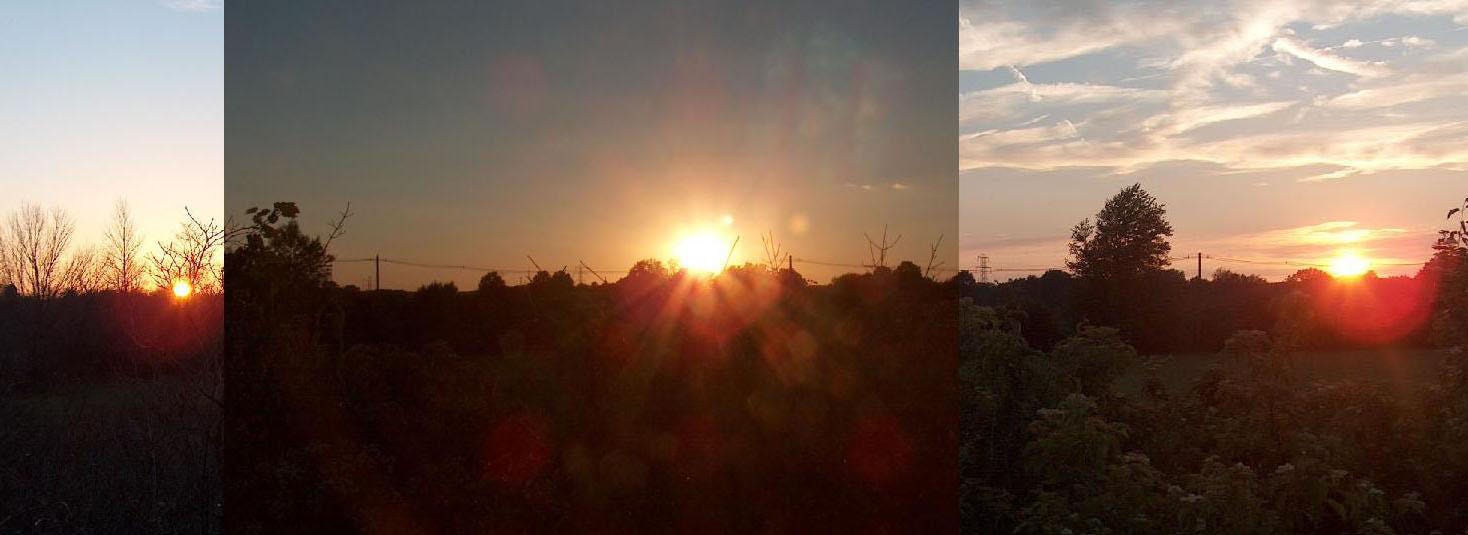
In neolithic times as farming was just starting to become a true industry, timekeeping was literally a matter of life and death as the success of the harvest depended on planting and reaping at the right time. To help in their farming efforts, the ancient peoples looked to the stars, specifically the Sun, to determine the length of the solar year which, once found, would allow for more specific divisions. After discovering that the year was roughly 365 days long, the ancients looked again to the Sun, noting how its position of rise/set changed during the year. In dividing up the year, the ancients looked to solar motion, namely its most Northerly/Southerly rises/sets along with its half-way rises/sets. Thus the four seasons, or quarters of the year were born.
Taking the concept of dividing up the year further, ancient peoples similarly split each season, or quarter of the year, into halves. The dates on which a mid way point of a season fell came to be called a cross-quarter or mid-quarter day. For these ancient farmers, these mid-season days were of special significance as they often coincided with the weather in ways that the solstices/equinoxes did not.
As for this cross-quarter day, early February often signifies the deepest point, at least in terms of temperature, of winter. Yes, astronomical winter arrives in December but the coldest air typically waits for another month or so to arrive in most locations. With the arrival of mid-winter, there is only one way for the temperatures to go at this point: up.
For us in the modern world, current cultures have had a good track record of incorporating the holidays of past ones into our modern way of life and/or modifying another culture’s beliefs to fit one’s own. Take Groundhog Day, for example. In every farming culture, people were always on the lookout for signs in nature that winter had reached its deepest point and that things would now be getting warmer. Depending on the locality, these animals whose behaviors to be watched included included badgers, bears, foxes, hedgehogs, snakes, and birds. For us in the United States, we chose the groundhog.
Whether you choose to believe Pennsylvania’s prognosticating rodent or not, at least statistically, we are at our coldest time of year, which means that things are only going to get better for people who hate the cold as, at least astronomically-speaking, we are now officially into the second half of winter.
Today’s a double feature! Why not check out the other half?
They’re all here! Why not check out February’s Monthly Guides?
The Monthly Sky
Visual Observing Calendar
February Featured Sight
Constellation of the Month