
SpaceShipOne Makes First Spaceflight
Way Back Wednesday for Week of June 21-27

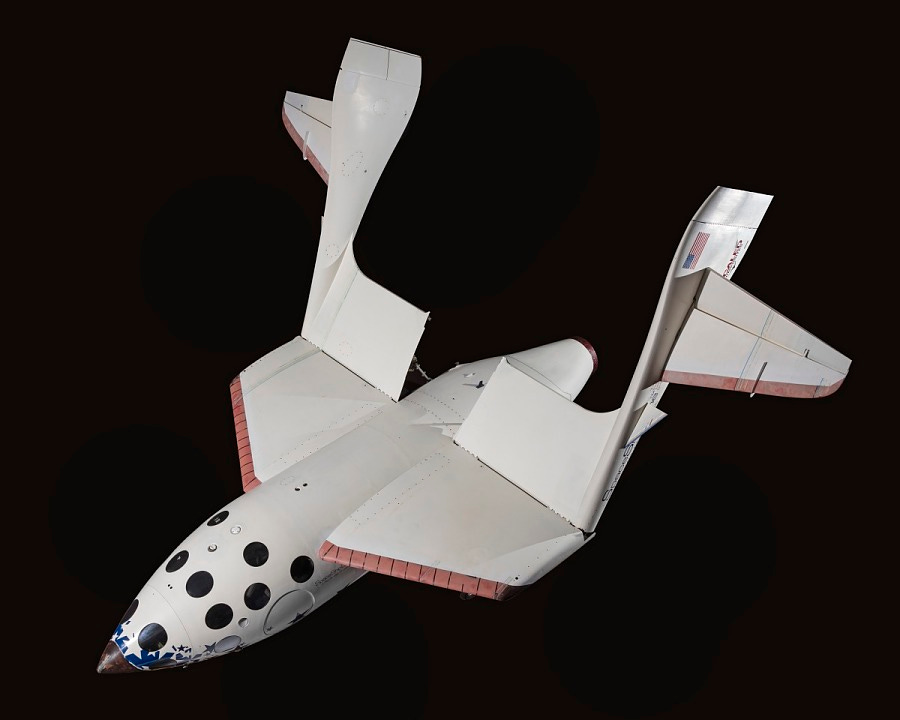
It’s another Wednesday, which means that it’s time for another trip in the time machine. In what is a first for this column in its history, we take a repeat trip back to a year already visited (2004) in order to witness history in the making. It was on June 21, 2004, that the first privately owned spacecraft left the Earth and claimed a prestigious prize along the way.
While exploration for its own sake is a noble pursuit, there are often other considerations involved in nudging humans to push the proverbial limits. A great motivator, past and present, was/is money. The Great Age of Exploration that began with Columbus (re)discovering the Americas in 1492 was set in motion 4 decades earlier in a quest to economize on the cost of imports.
In 1453, a watershed event in world history took place: the Byzantine Empire, which had survived its Roman brother for 1,000 years, finally collapsed. Until then, Western European traders had a pretty easy time of it traversing the Byzantine trade routes in order to procure exotic goods from the Far East. When the Ottoman Turks took over, seeing the potential for revenue, they upped the fees to assure safe passage for traders so much that some monarchs deemed it cheaper in the long run to try and find a new way to Asia than pay the Ottomans. It was essentially the desire to avoid high tolls, not discovery, that inspired Europeans to set sail all over the globe.
Come the early 20th century, the world was largely mapped, but the spirit of exploration, bolstered by the advent of technology unimaginable in the 1400s, remained intact. In 1919, Raymond Orteig, a wealthy New York City hotel owner, offered $25,000 (roughly $500,000 in 2026 money) to any pilot who could make a non-stop solo flight from New York to Paris. The prize would go unclaimed for 8 years before Charles Lindbergh made his historic flight in 1927.
Come the 1990s and more advances in technology, the bar was raised, literally. In 1994, American engineer, doctor, and entrepreneur Peter Diamandis read a book about Lindbergh and was inspired to start gathering funding for a new prize that was updated to reflect the Space Age. To meet this goal, Diamandis created the XPRIZE Foundation and announced a $10 million prize to be awarded to the first non-governmental organization to launch a reusable crewed spacecraft into space, defined as the 62 mile high Karman Line, twice within two weeks. The funding came by way of the Ansari family and the prize was renamed the Ansari XPRIZE in their honor. The challenge would attract 26 teams from 7 countries.
The winning combination would come by way of engineer Burt Rutan and Microsoft co-founder Paul Allen. Their final product was named SpaceShipOne, which was actually an air-launched, rocket-powered space plane capable of flying at 2,000mph. For comparison, Lockheed’s legendary SR-71 Blackbird could fly faster, but it could only fly about a quarter of the way to what the XPRIZE Foundation defined as being space.
As is to be expected, the trip from the drawing board to above the Karman Line took a lot of time. SpaceShipOne would not even make its first powered flight (it had previously done glides like during the development of the Space Shuttle) until December 17, 2003. Not coincidentally, this was the 100th anniversary of the Wright Brothers’ first heavier than air flight. In the intervening months, SpaceShipOne would make two more flights that pushed the craft ever higher into the atmosphere.
On June 21, 2004, the big day came: SpaceShipOne, piloted by Mike Melvill, was set to enter space for the first time. The flight nearly ended in disaster as SpaceShipOne rolled 90 degrees due to wind shear as it climbed. Melvill was able to level out and continue the climb. The rockets burned out at 180,000 feet and the craft continued climbing using only its own forward momentum. Due to the control troubles in the climb, SpaceShipOne fell well short of the planned height of 360,000 feet but reached an altitude of 328,491 feet, which was just enough to carry pilot and space plane above the Karman Line and become the first privately-owned and operated craft to enter what was defined as ‘space.’
SpaceShipOne would fly into space again on September 29. On October 4, SpaceShipOne claimed the Ansari XPRIZE by making a pair of spaceflights well within the prescribed 2-week window. The prize in hand, future flights were canceled to avoid damaging the first of its kind craft. SpaceShipOne was then transported across the country and made a few stops for the purpose of public display before being unveiled at the Smithsonian’s National Air and Space Museum on October 5, 2005, a year and a day after claiming the official title of world’s first privately-owned spacecraft.
The past is cool, but so is the present. Check out the Monthly Guides to stay current on ‘what’s up’ in a sky above you!


