
The Summer Solstice
Featured Sight for Week of June 21-27

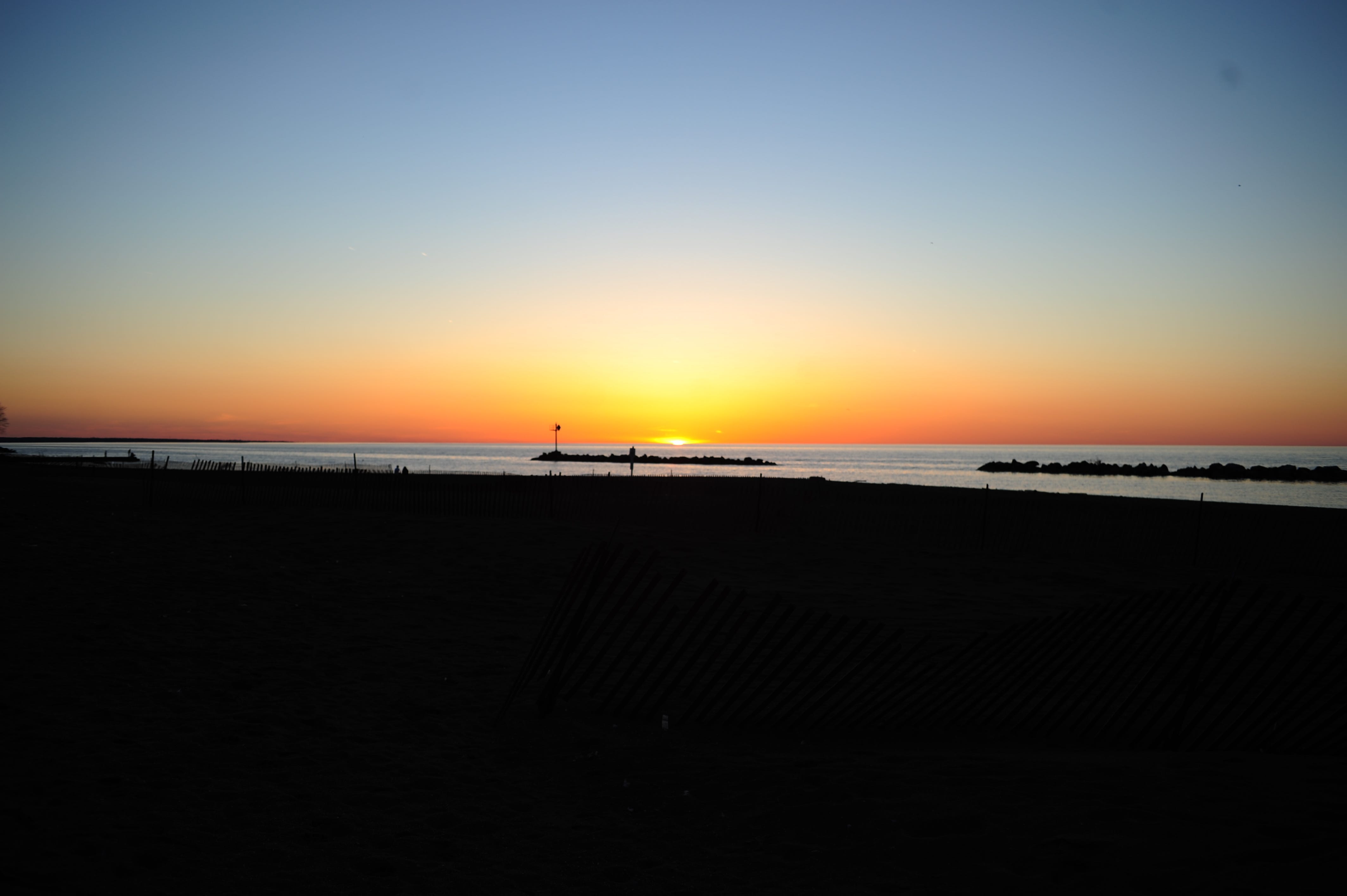
The arrival of June also heralds the arrival of summer, which arrives astronomically with the Summer Solstice, the longest day of the year, which happens to be today for 2026. The Solstice is the day the Sun takes its longest, highest path through the sky. For many, this is a surprising revelation as, although the weather will get hotter in many places into July, the Sun’s power will only weaken for the next six months.
Everyone is familiar with the four seasons. Depending on where one lives, the seasons can bring dramatic changes in temperatures and amounts of daylight in some locations and in other locations, not so much, but still enough to be noticeable to most. Still, for all of our familiarity with them, many people still ask the same question: why do we have seasons, anyway?
Short answer: it’s all about Earth’s tilt. For the longer answer, read on.
The reason that we have seasons is that Earth is tilted on its axis at 23.5 degrees. As the Earth goes around the Sun, either hemisphere will be tilted more toward/away from the Sun at different times of year. Additionally, if the Northern Hemisphere is tilted toward the Sun, The Southern will be tilted away from it. This is why the seasons in the two hemispheres are always opposite one another.
The four big days in terms of the seasons are the days that mark the seasonal changes: the Summer and Winter Solstices and the Vernal (spring) and Autumnal Equinoxes. Because these dates mark a change in the seasons, they are especially significant in Earth’s relation to the Sun.
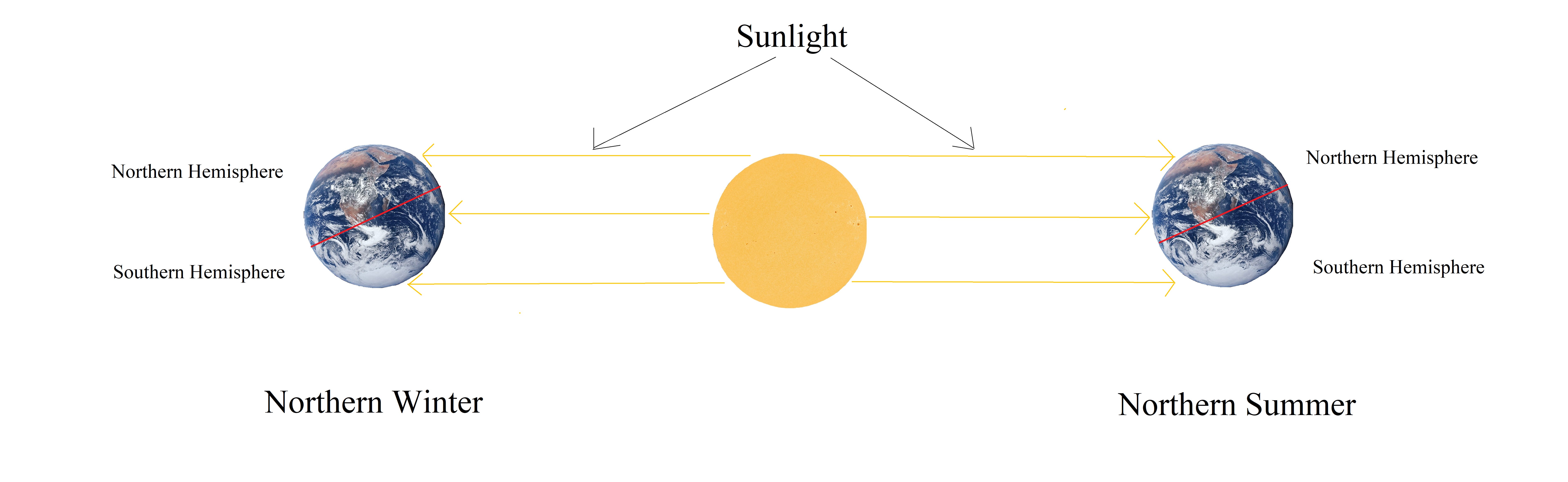
The Summer Solstice is today and is the day that one’s hemisphere is tilted most toward the Sun. As a result, the Sun will take its longest and highest path through the sky, resulting in the longest day of the year. Following the Summer Solstice, the days will get shorter, almost imperceptibly at first, but then within increasing rapidity until the Autumnal Equinox, and the first day of fall arrives. The term ‘equinox’ actually means ‘equal night’ and is only one of two days in the entire year where the day and night are both exactly 12 hours long and where the Sun will rise due East and set due West. In terms of the Sun’s path, it exactly splits the difference between its highest and lowest arcs through the sky. Following the Autumnal Equinox, the days will continue to shorten rapidly but the shortening of the days will start to slow as the Winter Solstice approaches. On the Winter Solstice, the Sun takes the shortest, lowest path through the sky as the observer’s hemisphere is tilted most away the Sun, resulting in the shortest day of the year. Following the Winter Solstice, the days will start to lengthen, very slowly at first but then with increasing speed, as the Vernal (spring) Equinox approaches. On the Vernal Equinox, the day/night will again be exactly 12 hours long (or will they?) and the Sun will again contact the horizon due East/West as it exactly splits the paths it takes through the sky on the solstices. From the Vernal Equinox, the amount of daylight will rapidly increase, gradually slowing until, once again, the Summer Solstice arrives.
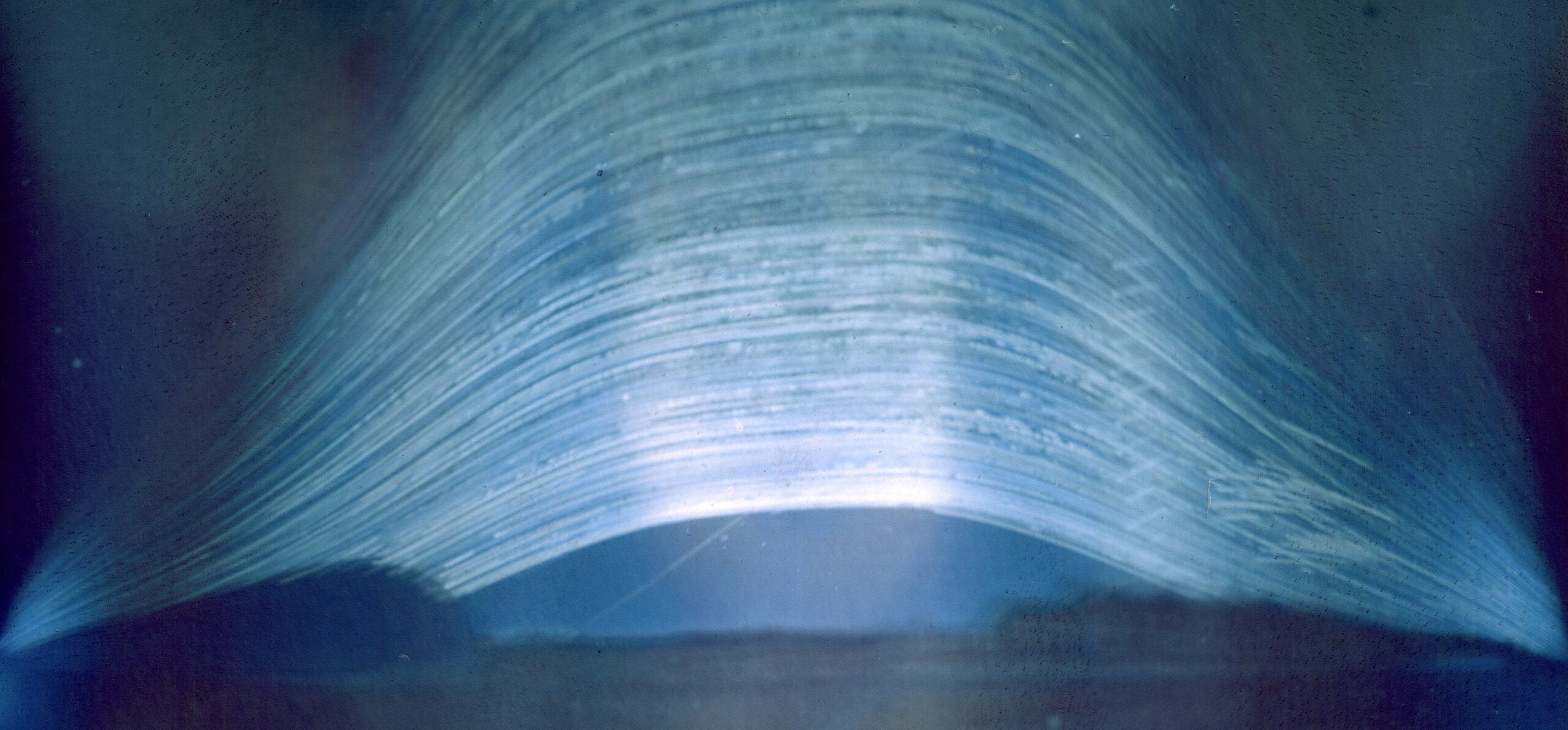
See also: How to make a pinhole camera.
Now for some fun: it’s possible to figure out exactly how high the Sun will be at local noon when it is exactly due South in your sky on either solstice or an equinox by using a simple formula.
First, find the latitude of your location. Latitude known, simply subtract your latitude from 90 to find the maximum solar elevation on an equinox. For our purpose, we’ll assume a latitude of 40N, which basically halves the continental United States. So, 90-40 is 50, which means that, on an equinox, the Sun will attain a maximum elevation of 50 degrees. For the Summer Solstice, add 23.5 to 50 for a maximum solar elevation of 73.5 degrees. For the Winter Solstice, subtract 23.5 from 50, giving a maximum solar elevation of only 26.5 degrees.
It is for these two reasons: (1) the incoming angle of sunlight and (2) the length of the Sun’s path through the sky that make summer hot and winter cold in many areas on Earth, especially the farther you go North/South from the Equator. If you live around the 40N latitude, you know that your seasons change dramatically though the course of the year.
For confirmation, go out near local noon on a sunny day near an equinox and the solstices and note how long your shadow appears. For more fun, capture a snapshot of your shadow on each of these three days and, once the set is complete, put them in a slideshow and compare. The difference will be very, very obvious.
So there they are: the reasons for seasons.
Other Items of Note
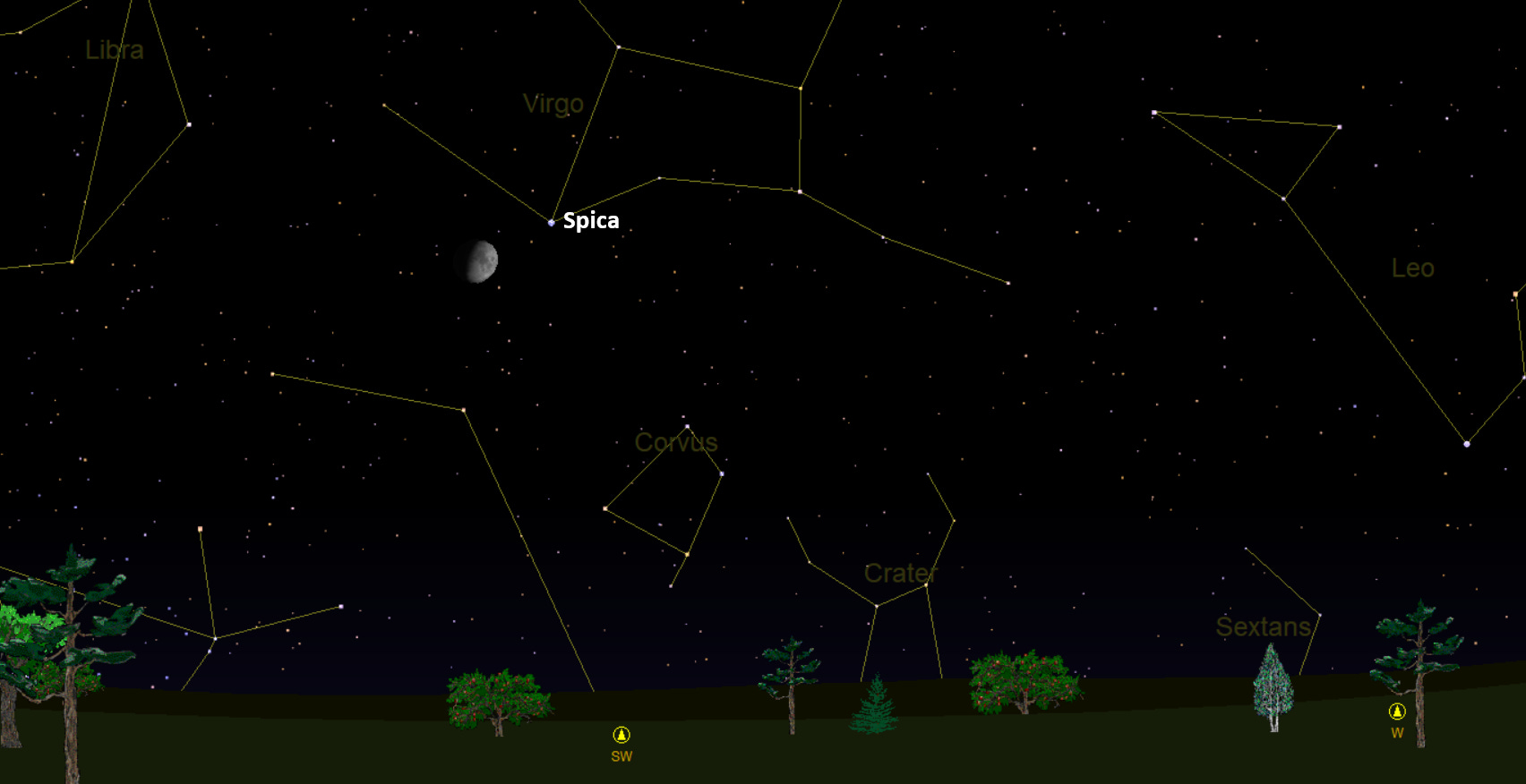
On Tuesday, the Moon will be passing very close to Spica, alpha Virgo. While it may be possible to see without optical aid, the Moon is over half lit and binoculars can be just the thing to cut through the glare.
Throughout the month of June, Saturn rises earlier and earlier to the tune of about 4 minutes per night. This week, the ringed wonder reaches a milestone: it is now rising 4 hours ahead of the Sun, which means ample time to observe the planet under a dark sky. Unfortunately, thanks to the short nights, seeing Saturn can be a hardship for most whether one stays up late or gets up early.
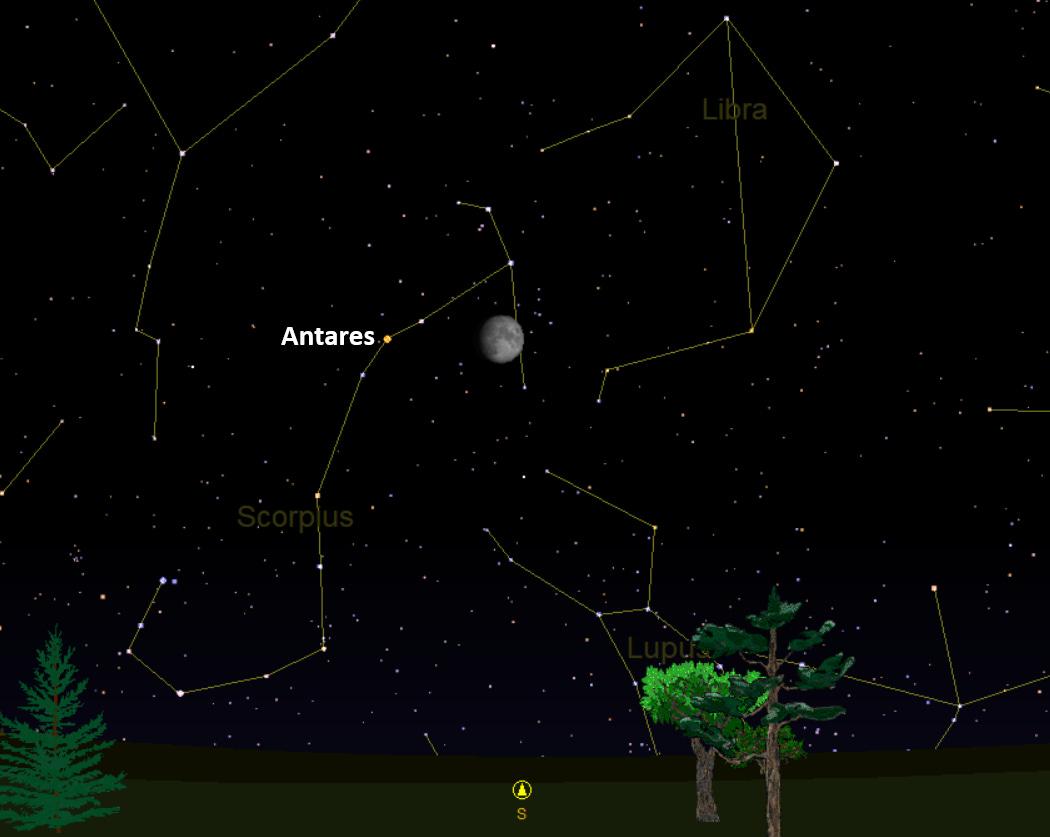
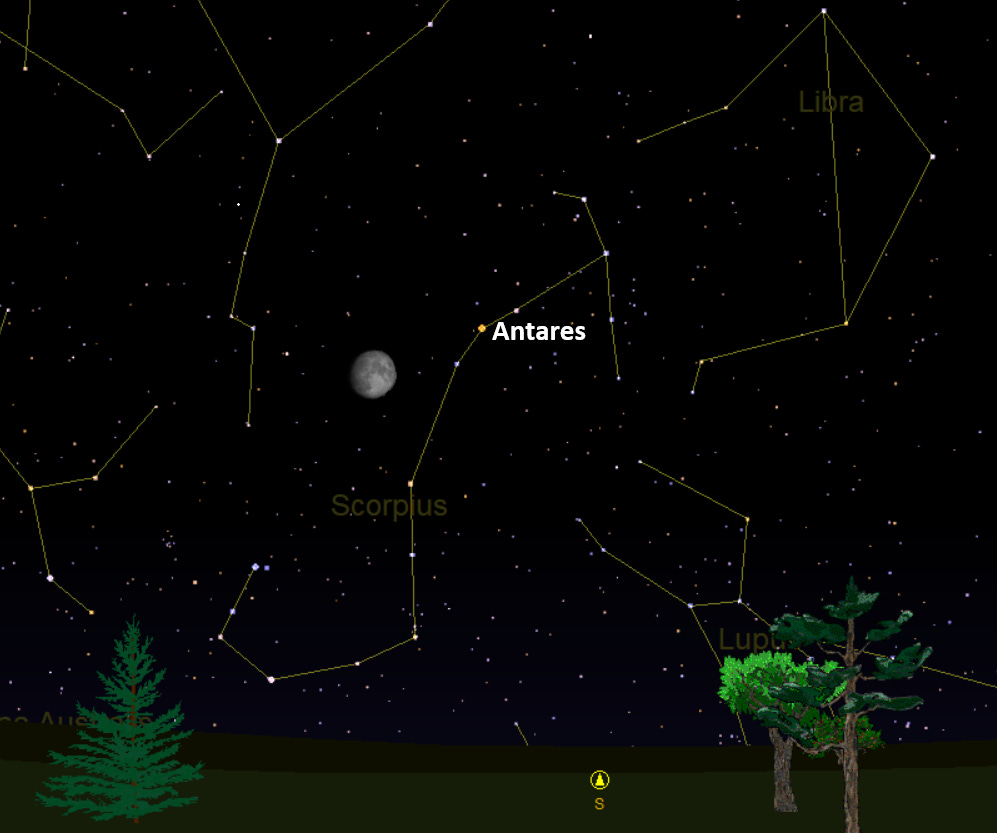
On Friday and Saturday, the Moon will park itself near Antares, alpha Scorpius. Antares means ‘rival of Mars’ in Greek and the star is aptly named as its red color closely resembles that of the Red Planet. The best part: this is 2-day event, meaning that Saturday offers a repeat should Friday be cloudy.
Speaking of the Summer Solstice, why not check out these related articles, too? Between seemingly impossible phenomenon and Earth-shaping discoveries made with essentially nothing, there’s much to learn by clicking below!

