
Total Lunar Eclipse
Featured Sight for the Week of March 1-7

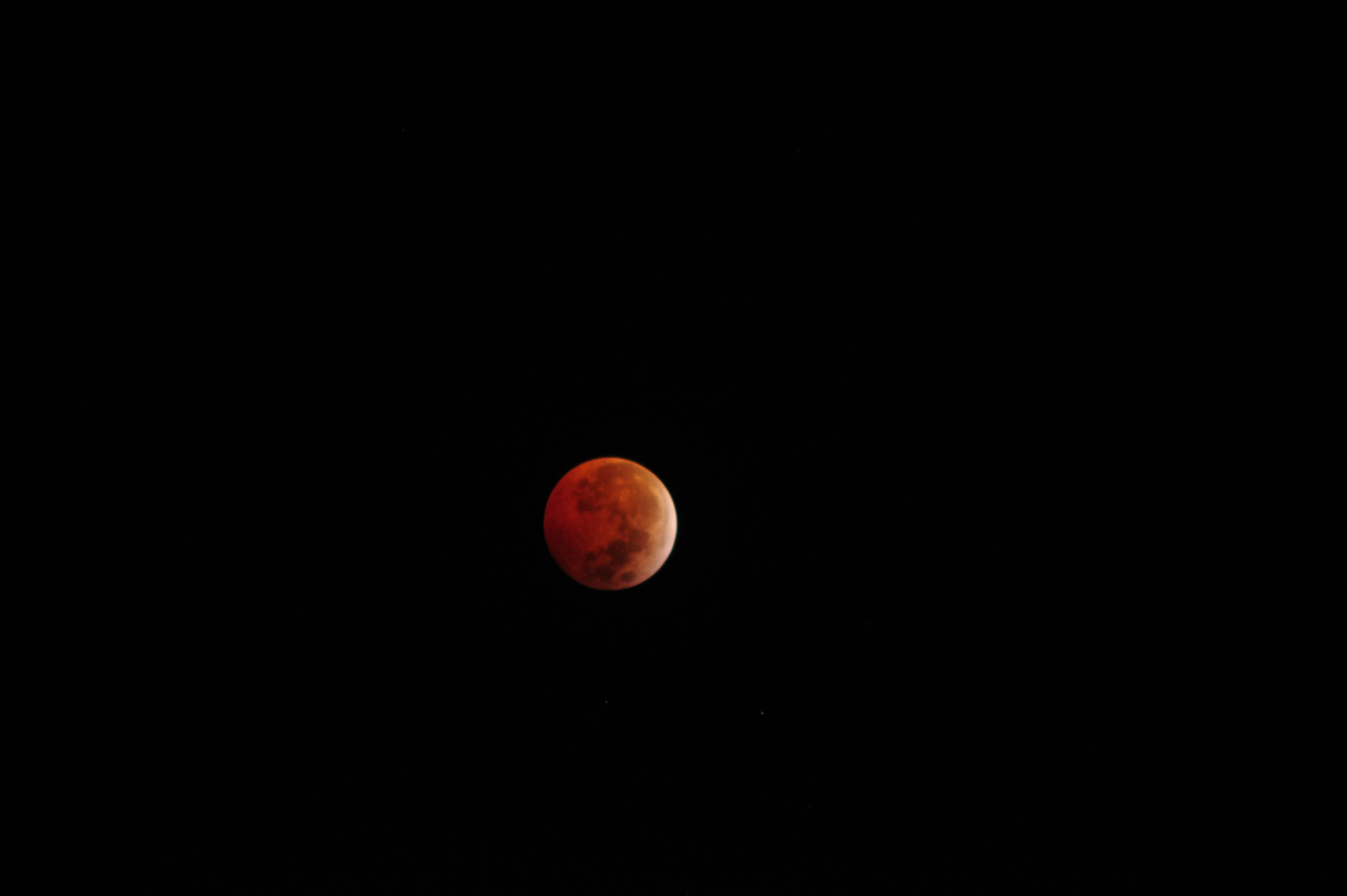
It’s a new week, which means that it’s time to spotlight a new cosmic event worth looking up for. This week’s feature is a big one, so big that it is getting reported in mass media: a total lunar eclipse, which takes place on Tuesday morning.
So, what is going to happen and how does one go about seeing it?
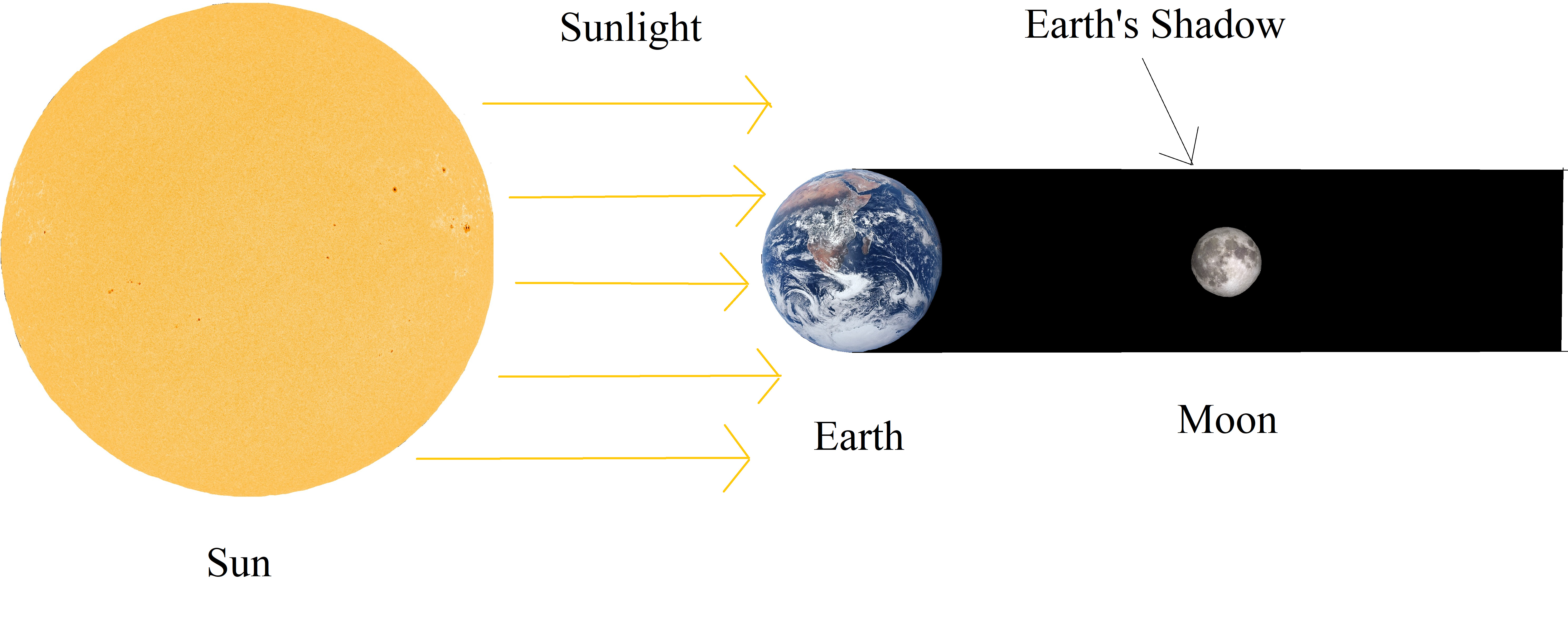
A lunar eclipse happens when the Sun, Earth, and Moon line up in that order. Lunar eclipses can only happen at Full Moon. When this happens, the Earth comes directly between the Sun and Moon, with the result of Earth’s shadow falling on the Moon. Because the Earth is casting its shadow on the much smaller Moon, the total phase of a lunar eclipse will last for roughly an hour, not minutes like a total solar eclipse. Additionally, a total lunar eclipse is visible for a very large area. It will be possible to see some of the total phase from roughly half of the Earth.
From the time the dark part of the Earth’s shadow, called the umbra, first begins to block the Moon through the eclipse’s conclusion, roughly 3 ½ hours will pass. As with a total solar eclipse, the Earth’s shadow will fall on the Moon to varying degrees during the eclipse, with the Moon being more obscured the closer to totality one gets. Now for the Blood Moon nickname, this is for totality only because, once fully in Earth’s shadow, the Earth’s atmosphere will scatter all of the visible light save the red wavelengths away from the Moon. Result: during totality, the red wavelengths of light from the Sun will pass through Earth’s atmosphere and fall on the Moon, making it appear red instead of its usual white/gray.
Additionally, depending on atmospheric conditions, the Moon will appear as a darker/lighter cast of red. To get a dark red color, there has to be a lot of airborne particulates in the atmosphere, most often resulting from volcanic eruptions or large wildfires. The 1992 total lunar eclipse was noted for being particularly dark. Why? A lot of ash from the previous year’s large eruption of Mt. Pinatubo was still aloft in the upper atmosphere, thus resulting in a dark, deep reddish cast to the Moon.
Now that we know what we’ll be seeing, how to go about seeing it?
The first step to planning your observing is finding out whether you can see the eclipse at all. To do that, go here and plug in your location (unless you live in Brookfield, CA, then it’s already done for you!). That done, you’ll get times for eclipse staging at your specific location.


As for what you can see, focus on the time where the Moon enters the Earth’s umbra, the dark part of the Earth’s shadow. This is when the partial phases of the eclipse begin. The penumbral phase can phase exhibits only a slight darkening of the Moon. The change in brightness is so slight that many people won’t even notice it.
As the partial phases of the eclipse progress, notice how the Moon appears to disappear. For any seasoned Moon observer, the phases will look odd as the partial phases of a total lunar eclipse don’t match the regular phases that the Moon goes through as it orbits the Earth. If you are watching with someone new to the hobby or completely unfamiliar with astronomy, be sure to point out the differences.
Shortly before the total phase begins, the Moon will start to take on a reddish hue as the aforementioned scattering of light starts to take place as the Moon reaches the deepest part of Earth’s shadow. This is definitely not like a solar eclipse, during which the Sun will appear to turn off and then back on again like a light bulb. At the mid point, the Moon will be as dark and red as it will get.
Once totality concludes, the Moon will go back to its regular color over the course of several minutes and it will again return to its normal color. Again, note the shape of the Moon as it reemerges from the Earth’s shadow. Like it was on entering, the shapes the Moon takes on the concluding side of a total eclipse will not mirror those of the traditional phases.
For people who are lucky, the eclipse will be visible in-full. For others, the Moon may appear rising or setting at totality, depending on your location. If you can see totality at your location, that’s great and worth rearranging one’s schedule for. If if totality is not visible for you, it’s still worth a look as you can see the eclipse in partial phases that will show some distinctly weird lunar ‘phases.’
Of course, there’s no seeing the eclipse if it’s cloudy, so keep an eye on your local weather forecast.
Clear skies to all!
Other Items of Note
First on the agenda for observers living in the United States and Canada should be taking advantage of the last week of early nights. Daylight Savings Time will arrive next Sunday, which means that there are only 7 nightfalls left before we spring ahead.
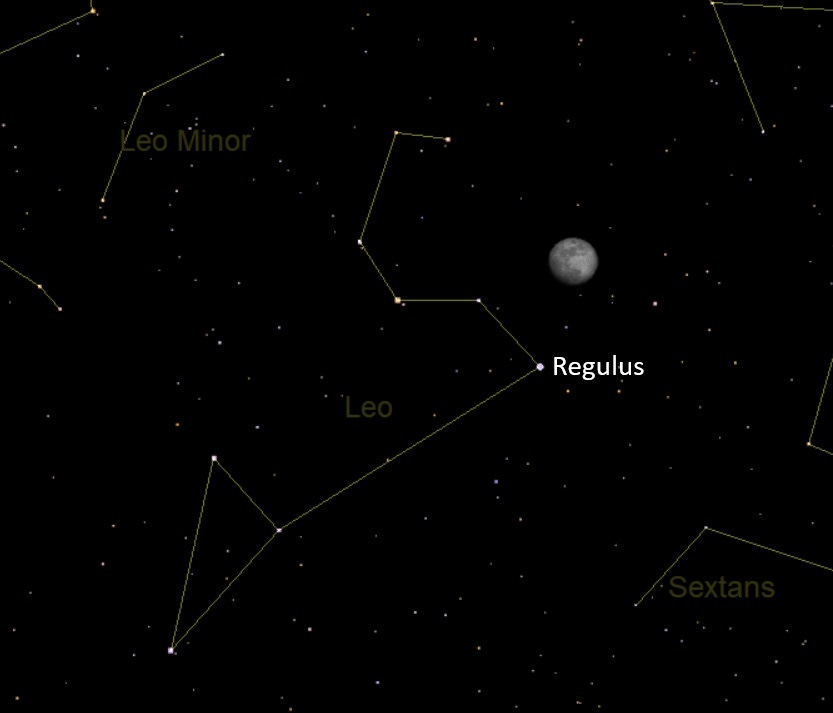
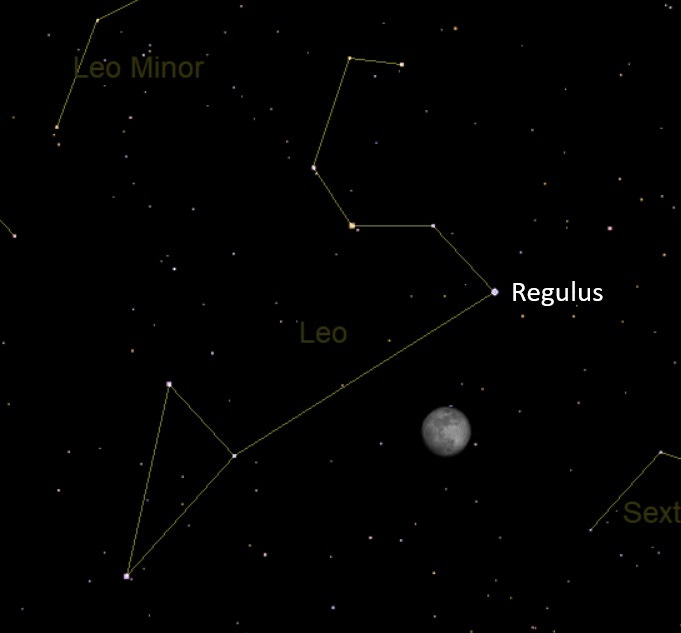
Tonight and tomorrow, the Moon will be very close to Regulus, alpha Leo. The best part: no telescope is required. Simply look up to find the Moon and notice the bright blue star nearby.
On Saturday, Mercury will be at inferior conjunction. Don’t go looking for it, the planet is directly between the Earth and the Sun.
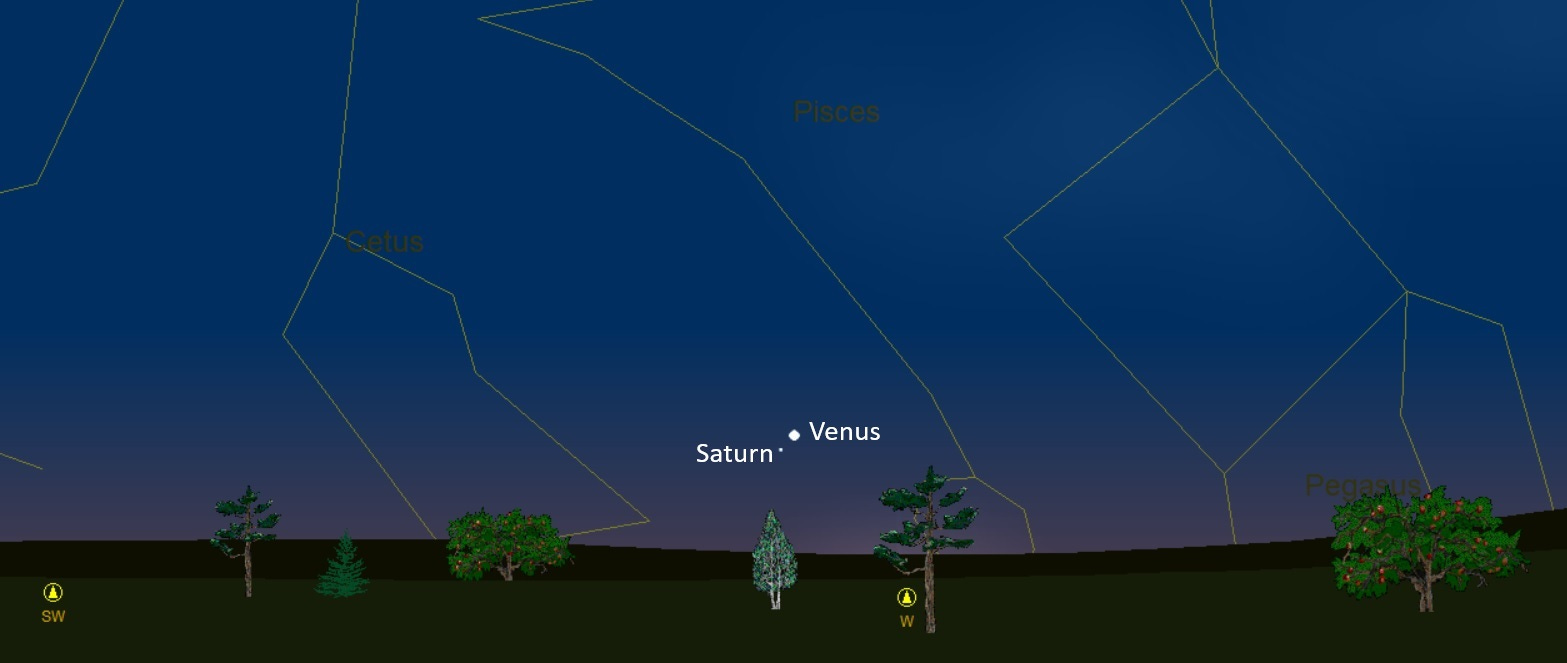
Other time-specific days are arriving this week for our evening planets. On Monday, specifically, Venus is now setting an hour after the Sun as it continues its reemergence from the Sun’s glare. Look for Venus to climb slightly higher in the Western sky just after sunset as the month continues. Going the other way is Saturn, which continues to sink toward the Sun and will be setting only 90 minutes after the Sun come Wednesday. Even though Saturn is higher, it will be harder to see owing to it being much dimmer than Venus. Tip: use Venus to help find Saturn.
Also, the above planetary pair will be gearing up for a close pass Sunday evening about 30 minutes after sunset. A good Western horizon is a must. 5 degrees obstruction or less is ideal. To simulate 5 degrees, hold three fingers vertical at arm’s length. Start scouting locations now!
Oh yes, today is a double feature. Why not check out the other half?
