
Latest Sunrise
Featured Sight for Week of January 4-10

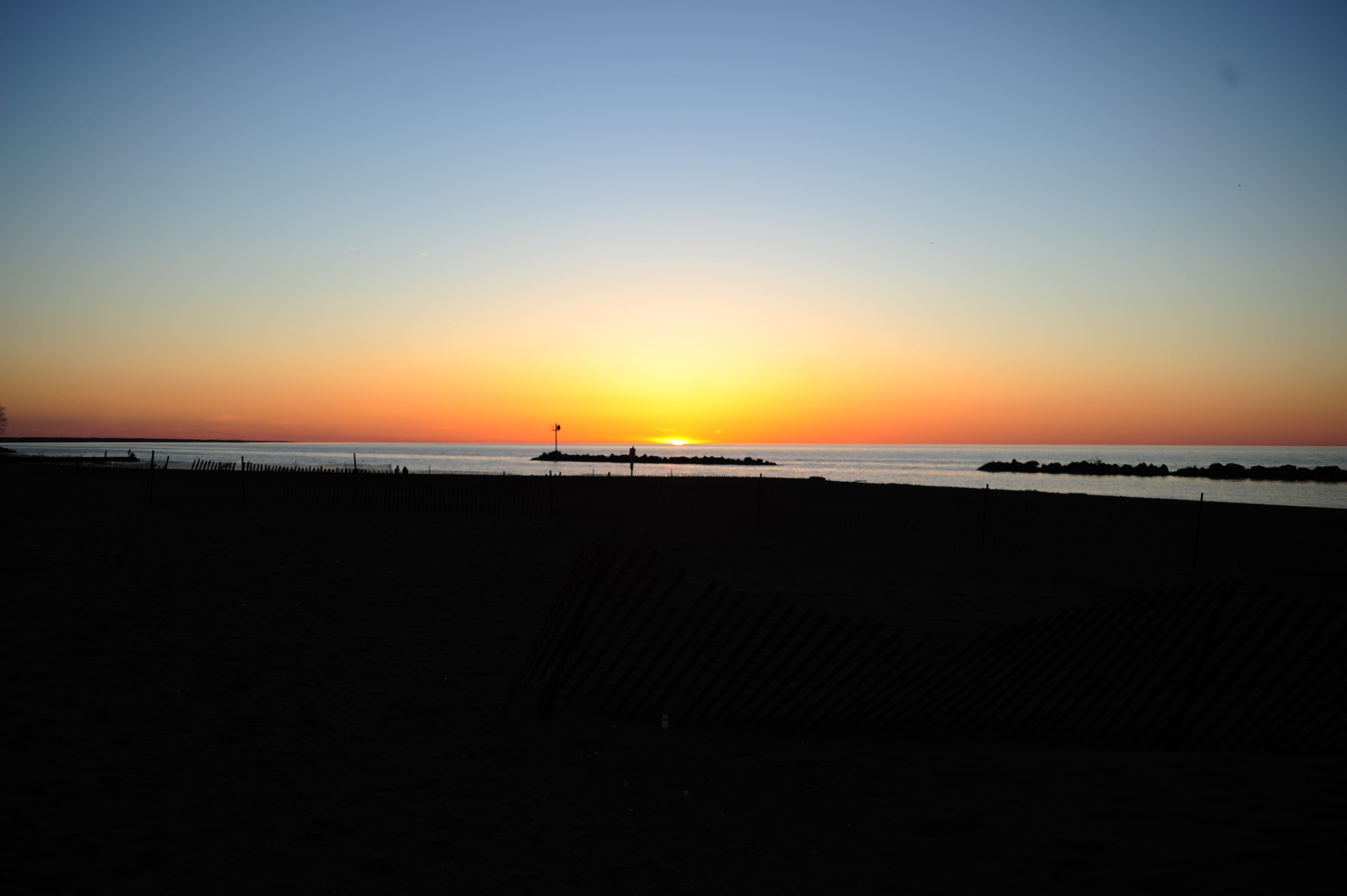
December brought the Winter Solstice, the shortest day of the year, on the 21st of December. For anyone who watches the nightly local news reports, the meteorologist will often highlight the Sun’s rise and set times. There may be a special point of note about sunrise as this week marks the latest sunrise of the year for 2026. How can this be if the Solstice was two weeks ago?
Well, it all has to do with the shape of the Earth’s orbit.
In any science textbook picture, the planets appear to go around the Sun in circular orbits. This isn’t true. In the text, it will be specified that the planets orbit the Sun in ellipses, which are slightly elongated in shape. On top of that, the text will then add that an ellipse has two foci and that the Sun is located at one of these. In everyday terminology, the Sun is not at the center of the Earth’s orbital path.
Herein lies why the latest sunrise will never happen on the Winter Solstice.
Because the Sun is not at the center of Earth’s orbit, it will appear to actually exhibit an East-West shift of its position in the sky. If one is really dedicated, this effect can be photographed. Simply take the camera out to the same location several times over the course of a year at regular intervals and photograph the Sun at exactly the same time of day while disregarding the time changes. Thanks to digital technology, it is easy to overlay the photos one on top of the other to get a composite. The result: the Sun will appear to move in a figure eight pattern called an analemma. For such a picture, go here before continuing with the article.
By looking at the analemma, there is another problem: there is a lot more variance in the Sun’s position near the Winter Solstice (low in the sky) than the Summer Solstice (high in the sky). What’s going on here? This time, the answer is very simple: the greater solar movement in winter is because the Earth moves faster near the Winter Solstice because it is closer to the Sun at a point called perihelion, which results in a greater apparent solar motion simply because the planet is moving more each day. Oh, if you’re interested, the Earth will move about 75,000 miles more on the perihelion than the aphelion day, which takes place near the Summer Solstice when Earth is at its farthest from the Sun.
It is for these two reasons, the Sun not being at the center of the Earth’s orbit and the changes in the Earth’s speed, that the latest sunrise times don’t match up with the Winter Solstice, but are shifted about two weeks after. As for the earliest sunset, it took place about two weeks before the Winter Solstice.
As an afterthought, in the summer, because the Earth is moving more slowly, the days of earliest sunrise/latest sunset are only about a week off of the Summer Solstice.
Other Items of Note
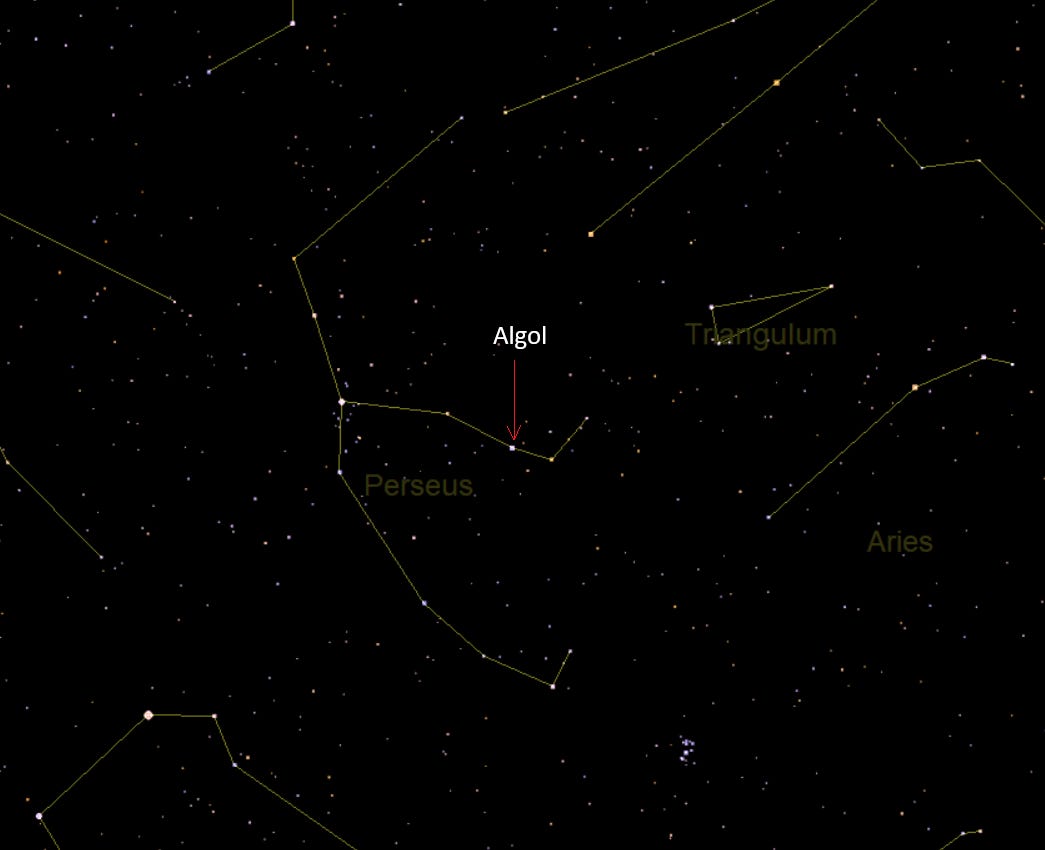
Times are good to catch Algol as the Winking Demon will be offering a pair of dimming events this week. On Wednesday morning, Algol will reach minimum at 12:13am EST, making for an opportunity to catch an entire eclipsing event owing to the long nights. Can’t stay up all night? No problem, it should be easy to catch at least the first or latter half without having to completely rearrange one’s schedule. On Friday night, another minimum will take place at 9:02pm EST.
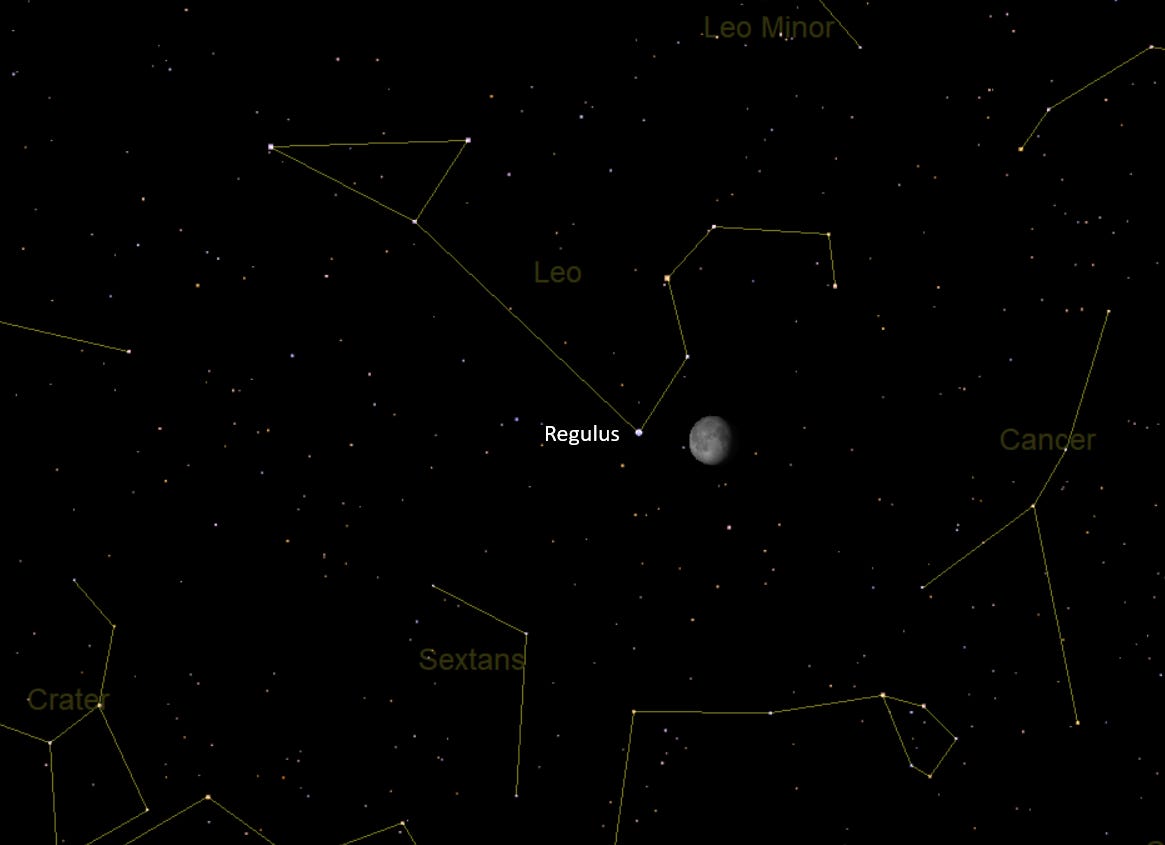
On Tuesday, the Moon will pass very close to bright blue Regulus in the predawn sky. No telescope is required. Being predawn, the temperature will be at its lowest at this time but there is a warming thought to be had if you’re freezing while observing: Regulus is the brightest star of the prominent spring constellation of Leo the lion.
As already noted in the Monthly Featured Sight column, Jupiter will reach opposition on Saturday, meaning that it will be up all night long.
Clear skies to all.
Oh yes, today is a double feature, so why not check out the other half?
This is just for this week. There’s a lot of other interesting stuff going on in the sky, so why not check out January’s monthly guides?
The Monthly Sky
Visual Observing Calendar
This Month’s Feature
Constellation of the Month
Thank you for the great explanation of something I wasn’t aware of, and most aren’t unless they’re early risers, and also not something I see written in many astronomy books. I heard weather forecasts mentioning it and was all ‘but that’s wrong, you’re not an astronomer, if you’re noticing a sunset difference or sunrise maybe it’s cloudy’ and I have not paid attention to changing sunrise times on my apps, but will now!